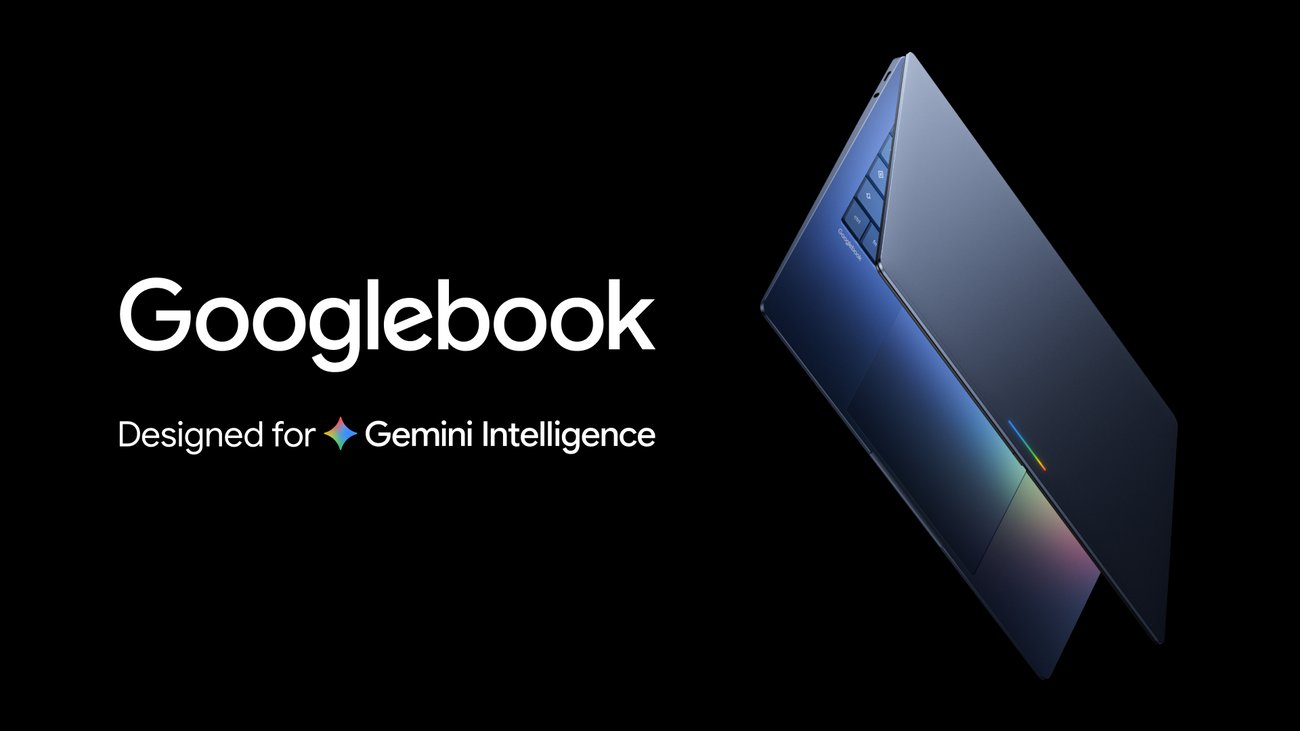
Google has just unveiled Googlebook – a brand new category of laptops built from the ground up for AI. Announced on May 12, 2026 via the Google Keyword blog, Googlebook is pitched as the successor to Chromebook for the AI era, blending Android and ChromeOS into something new, with Gemini baked in at every layer.
The launch is being positioned as a generational shift – the same way Chromebook represented the move to a cloud-first world over 15 years ago, Googlebook is meant to define what a laptop looks like when intelligence is the operating system.
What Makes a Googlebook Different
The marquee feature is something Google calls the Magic Pointer – a reimagined cursor built with input from the Google DeepMind team. Rather than a dumb arrow, the Magic Pointer is powered by Gemini and becomes contextually aware of whatever you’re pointing at. Hover over a date in an email and it can offer to schedule a meeting. Select two images – say, your living room and a piece of furniture you’re considering – and it can visualise them together. It’s the kind of feature that sounds like a demo trick until you think about how often you could actually use it.
There’s also “Create your Widget” – a Gemini-powered desktop widget builder where you describe what you want, and Gemini assembles it. Planning a trip to Berlin? Ask Gemini to pull your flights, hotel, restaurant reservations, and a countdown into a single dashboard widget. No app hunting, no tab switching.
Android Integration and File Access
Googlebook runs on Android’s tech stack, which has an important practical benefit: it’s designed to work with your phone without friction. You can open a phone app directly on your laptop screen without transferring anything. If you get a Duolingo reminder mid-meeting, pop over, finish the lesson, get back to work. If you’re editing a document and want a photo from your phone, Quick Access lets you browse and insert phone files directly from the laptop’s file browser – no USB, no cloud transfer needed.
Hardware, Partners, and the Glowbar
Five major manufacturers are building the first wave of Googlebooks: Acer, ASUS, Dell, HP, and Lenovo. Google is promising premium build quality across the range. Every Googlebook will feature a distinctive design element called the glowbar – a hardware signature that marks it as part of the category. Google describes it as “both functional and beautiful,” though exact details of what it does beyond aesthetics haven’t been fully revealed yet.
The devices are expected to land this fall 2026. No pricing has been announced yet, but the “premium” positioning suggests these won’t be budget machines. You can register your interest now at googlebook.com.
The End of Chromebook?
Google hasn’t confirmed Chromebook is going away, but the framing of Googlebook as the new laptop category for the AI era makes the direction clear. For existing Chromebook owners, the transition question will likely centre on whether their existing devices get software updates and for how long.
For anyone shopping for a new laptop this fall, Googlebook is shaping up to be one of the most interesting launches of the year – either genuinely transformative or an expensive AI demo, depending on how the Magic Pointer holds up in daily use.