The Subnautica 2 lawsuit just took a wild turn. Court documents reveal Krafton’s CEO allegedly turned to ChatGPT for help avoiding a massive payout to the game’s creators – then admitted using the AI tool in court testimony days later.
What’s New
According to a pre-trial brief filed by Unknown Worlds co-founders Charlie Cleveland, Max McGuire, and Ted Gill, Krafton CEO Changham Kim allegedly used ChatGPT to brainstorm ways to cancel a $250 million performance bonus. The court filing states: “Kim turned to artificial intelligence to help him brainstorm ways to avoid paying the earnout. ChatGPT likewise advised that it would be ‘difficult to cancel the earn-out.’”
Krafton initially denied the allegation, calling it “a distraction.” But during court testimony on November 18, Kim confirmed he did use ChatGPT – though his explanation differed from what the co-founders claimed. Kim said through a translator: “I talked to the legal team, the finance team, and the corporate team, and the PR, all these various teams, and I also actually searched on ChatGPT to get faster answers to figure out what kind of rights we have.”
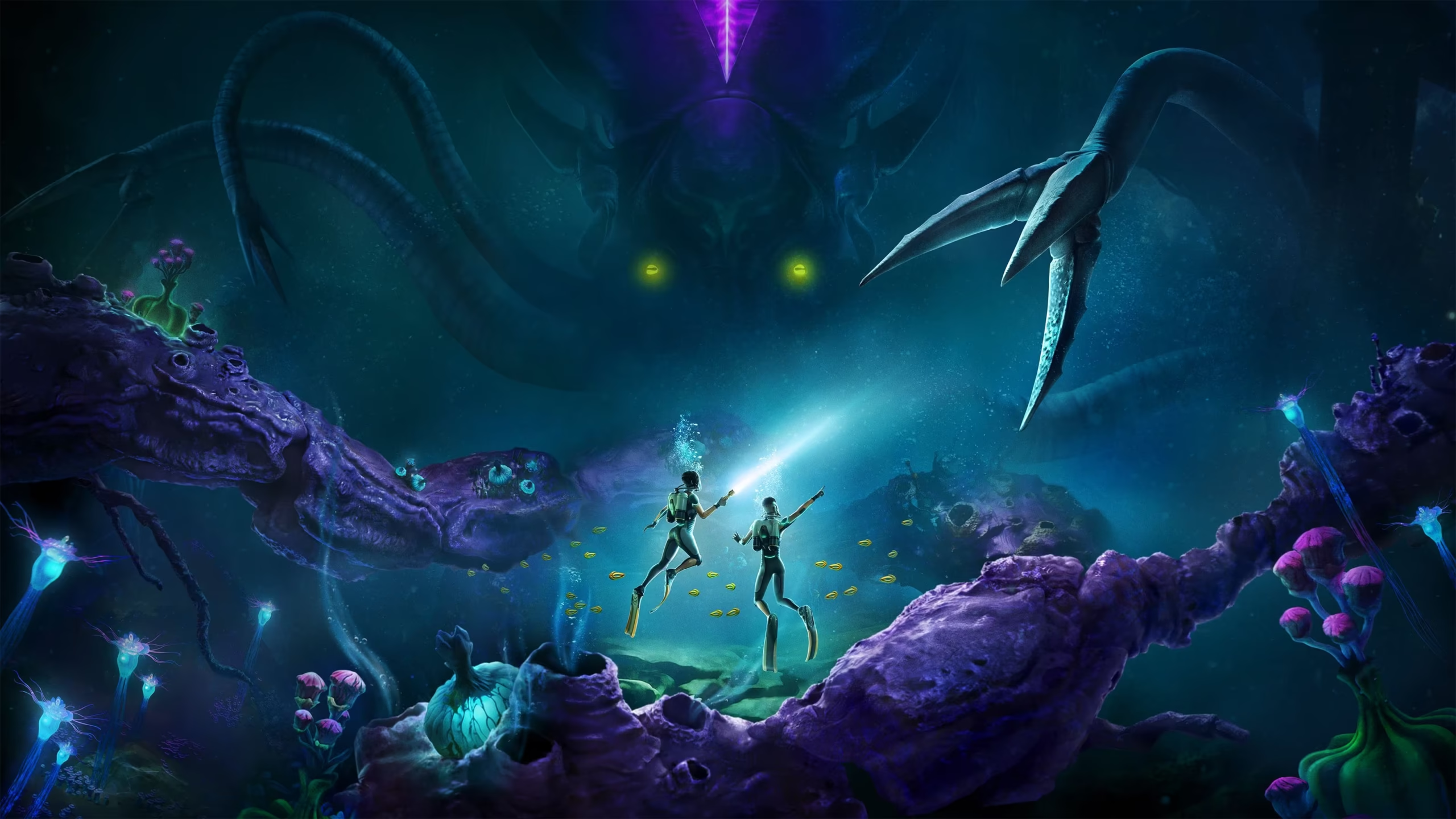
The lawsuit centers on Krafton’s July 2025 decision to fire all three co-founders and delay Subnautica 2 from 2025 to 2026. The timing matters because the earnout was tied to hitting revenue goals by the end of 2025. By delaying the game to 2026, it pushes the release outside that window.
Court documents obtained through discovery include Slack messages between Kim and Richard Yoon, Unknown Worlds’ then-CFO. The messages show discussions about offering the founders $75 million instead of the full earnout amount. When negotiations stalled, Yoon wrote: “It might be easier just to take over.” Kim responded: “Set a date and send a letter.”
The co-founders’ brief alleges Krafton created a secret task force called “Project X” with two goals – either negotiate a lower payout or execute a takeover of Unknown Worlds. Krafton maintains the firings were justified because the founders abandoned their responsibilities and the game needed more development time.
Why It Matters
This case highlights how messy game studio acquisitions can get when massive earnouts are involved. Krafton paid $500 million upfront for Unknown Worlds in 2021, with up to $250 million more tied to Subnautica 2’s success. About 90% of that bonus was allocated to the three co-founders.
The ChatGPT angle adds an ironic twist. Weeks before these allegations surfaced, Krafton announced it’s becoming an “AI-first company” and investing $70 million into AI technology. They even offered employees voluntary resignation packages if they couldn’t adapt to “the era of AI transformation.”
For fans, this drama is overshadowing what should be an exciting release. Subnautica 2 has over 2.5 million Steam wishlists and recently became the platform’s most wishlisted game. But community reaction has been largely negative toward Krafton, with many fans saying they won’t buy the game if it means supporting the publisher.
Krafton’s legal strategy has also shifted throughout the case. They originally claimed the game wasn’t ready for release and the founders wanted to launch it unfinished. But in September, they dropped that argument after being pressed for evidence. They pivoted to claiming the founders stole confidential files – allegations that only surfaced after the terminations had already happened.
According to PC Gamer’s coverage of court proceedings, even the judge found Krafton’s shifting arguments “a little bit bewildering.”
The co-founders’ brief also quotes a Krafton internal report showing the firings damaged studio morale. Employees reportedly cited “a significant lack of trust in Krafton” and fear that anyone who pushed back could be fired.
The Bottom Line
The trial concluded on November 19, with a post-trial hearing set for January 9, 2026. A judge will decide whether Krafton breached its acquisition contract or whether the co-founders failed to meet their obligations. Subnautica 2 is still scheduled for 2026 early access, but this legal battle is casting a long shadow over the release. What do you think – is using AI to explore contract loopholes just smart business, or does it cross an ethical line?
Sources: